Activity 8: Brussels, the principal site of the European Union institutions

Brussels, capital of what?
Activity 8: Brussels, the principal site of the European Union institutions
In addition to being the capital of the Federal State, the Flemish Community and the French Community, Brussels is also generally considered the "capital" of the European Union. This title derives from Brussels being the main seat of the European institutions, as shown in the map below.
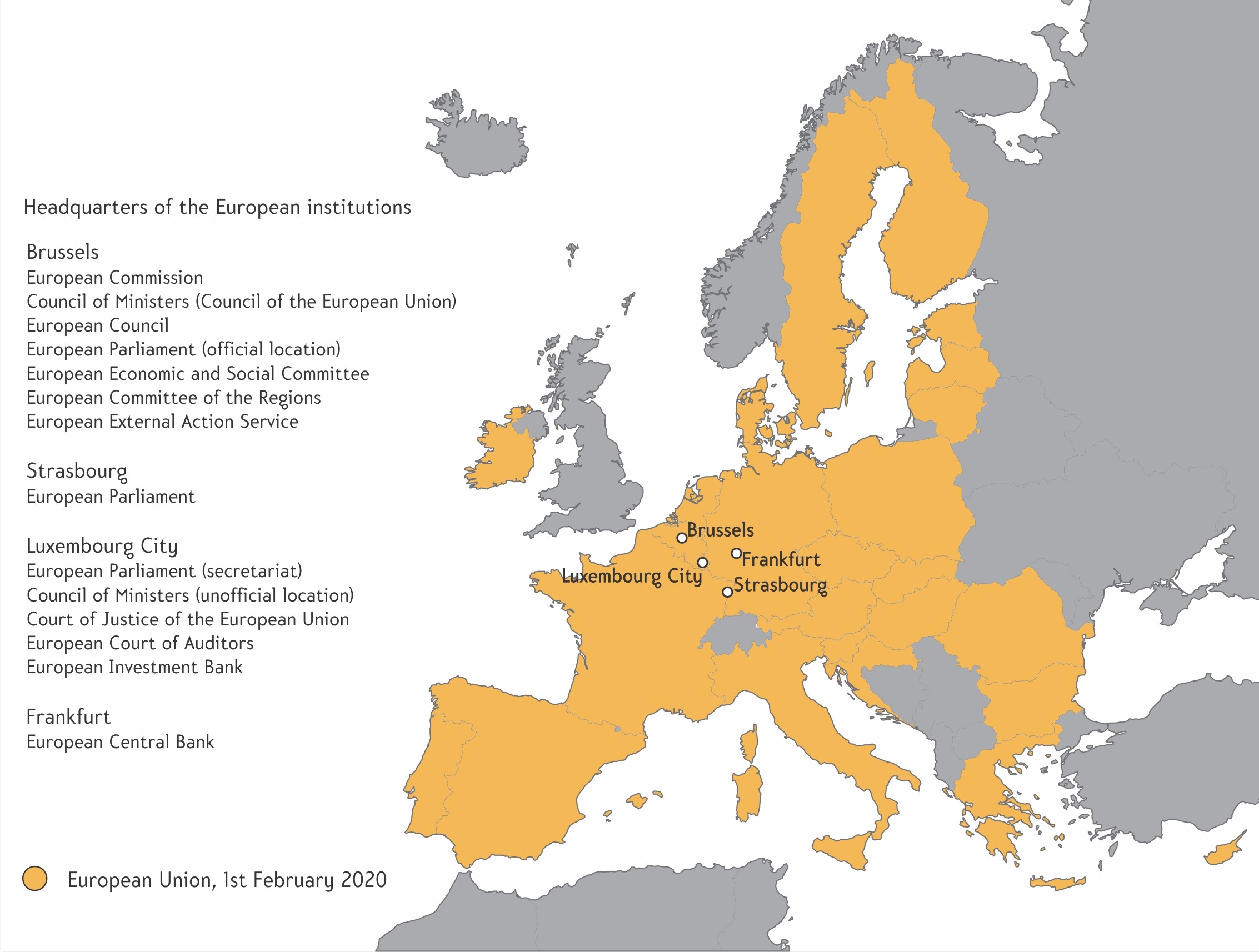 The different European institution headquarters.
© Bourrichon, CC BY-SA 3.0; Cartography: Royal Belgian Geographical Society (SRBG)
The European Union is the voluntary association of 27 European countries in economic and political matters. The competences of the European Union are listed in the treaties signed unanimously by the Member States.
The origins of the European Union date back to the post-war period, when Belgium, France, Luxembourg, Italy, the Netherlands and the Federal Republic of Germany decided to create a common market for coal and steel, as well as common institutions. The European Coal and Steel Community (ECSC) came into being on 23th July 1952, following the signing of the Treaty of Paris and its ratification by the various national parliaments in 1951.
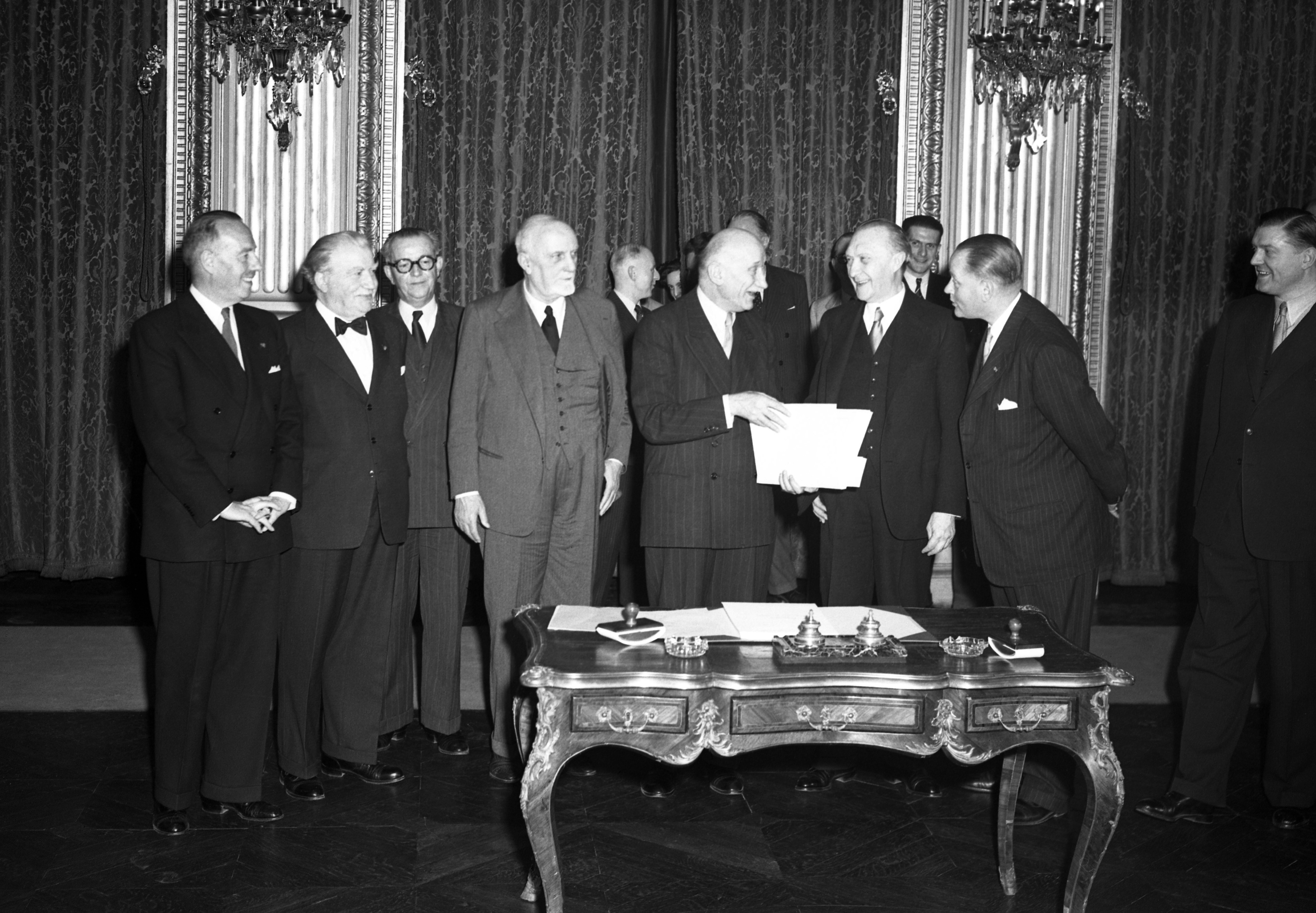
The signing of the Treaty of Paris (known as the "ECSC Treaty") in 1951.
© European Commission - Audiovisual Service, 2019.
European economic integration continued with the signing of the Treaties of Rome on 25th March 1957. The first treaty established the European Economic Community (EEC) with the aim of creating a common market (to facilitate the trade of goods other than coal and steel), while the second treaty established the European Atomic Energy Community (Euratom). The operation of these Communities is structured in an institutional triangle:
- the European Commission (composed until 2004 of one commissioner per small Member State and two per large Member State, responsible for proposing and implementing policies);
- the Council of Ministers (where each Member State is represented by one minister);
- the European Parliamentary Assembly (called the European Parliament from 1962 onwards).
The location of the institutional seat of these new Communities was the subject of heated debate among the Member States. There was an agreement to bring these institutions together in one city, but after the signing of the Treaties of Rome, there was no agreement as to where. Several cities were candidates: Brussels, Luxembourg and Strasbourg, but also some Italian cities.
Brussels was chosen thanks to, in part, its location in a small country at the crossroads of major European traffic routes, within the heart of the European megalopolis (as you will see in section 4). But, above all, it was its facilities for accommodating European civil servants and hosting their administrative buildings, that made Brussels the best choice as the capital of the European Communities (the future European Union).
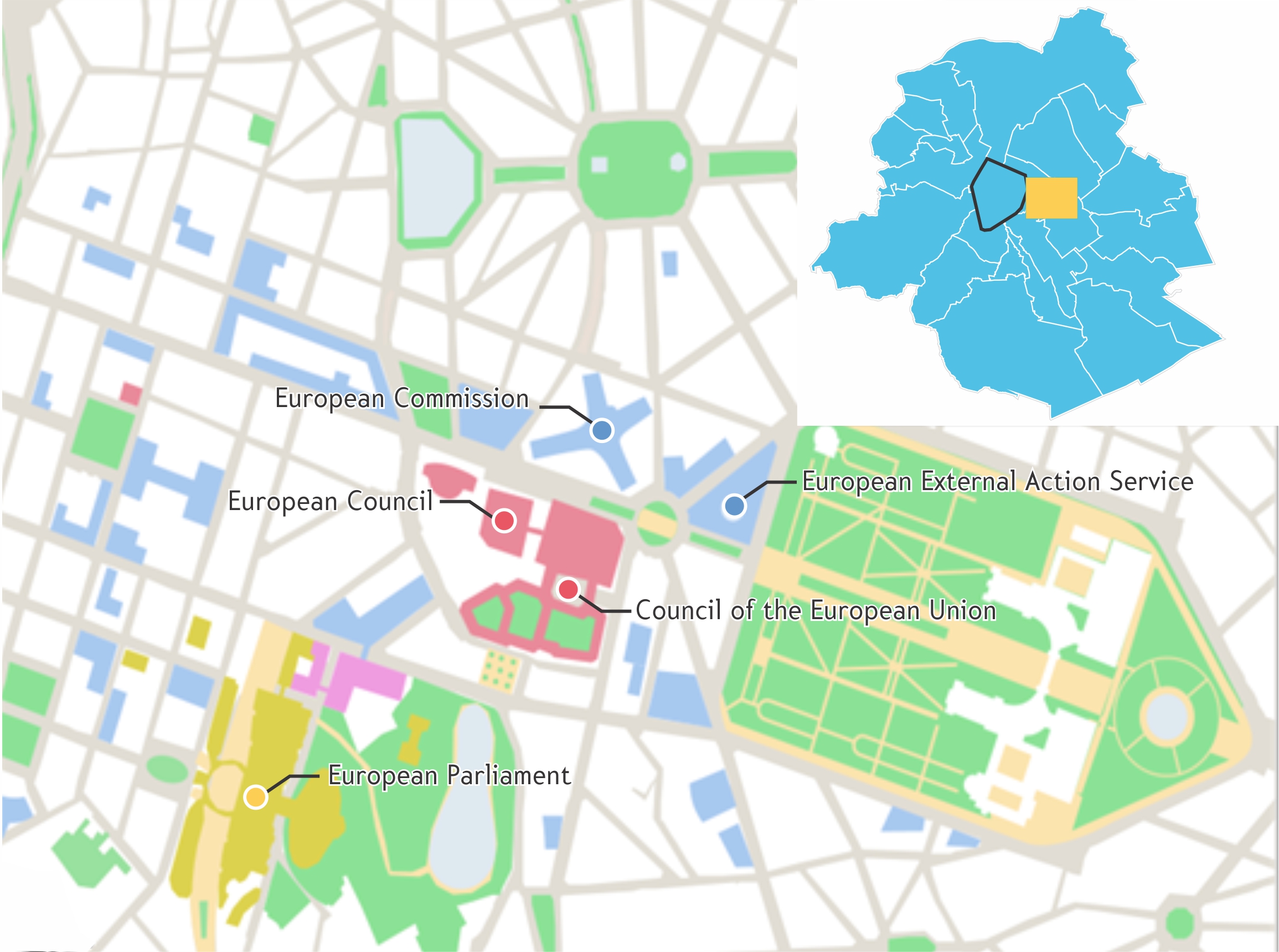 The European Quarter today.
Cartography of the Royal Belgian Geographical Society (SRBG)
With this timeline, discover the main stages of how Brussels became the main seat of the European institutions.
If you want to know more about the development of the European Union, watch this short video that summarises its history:
Do you have a suggestion, comment or remark about this activity? Click here!